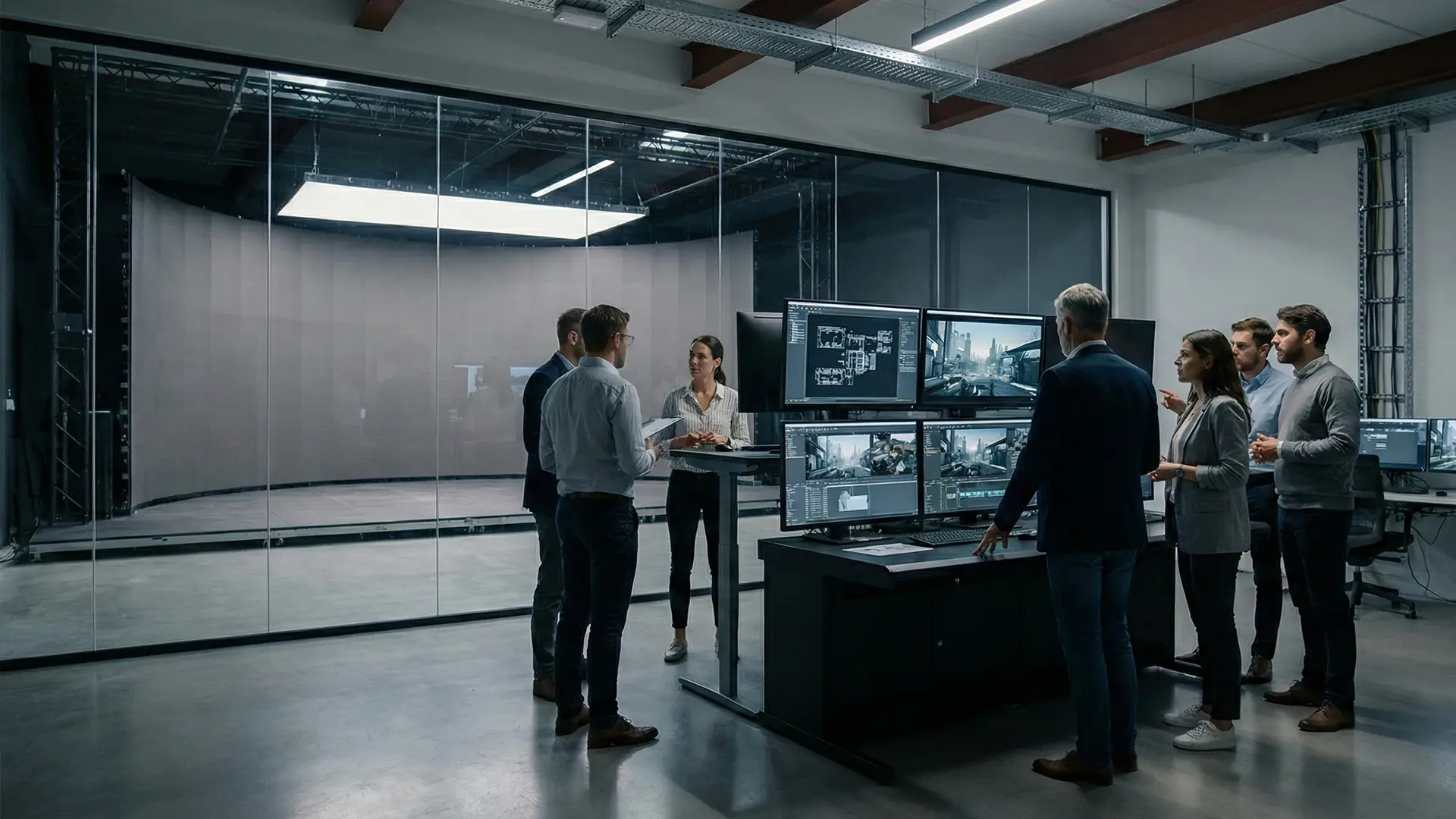
The question comes up constantly in production planning meetings. Marketing directors sit across from production teams, spreadsheets open and calendars displayed on screens, trying to determine which approach makes sense under real deadlines. Virtual production vs traditional VFX is not just a technical debate anymore. It has become a business decision that affects campaign timing, quarterly budgets, and ultimately whether a product launch hits the market on time.
Campaign launch dates once allowed for built-in flexibility. A few weeks here or there rarely caused problems. That reality has shifted dramatically in recent years. Social media cycles move faster, competitor responses happen within days, and seasonal windows close quickly. Missing a launch date by three weeks can mean missing the entire opportunity.
Questions around the video production timeline have moved from production departments into executive discussions. When a new product needs visual content for launch, the timeline works backward from a fixed date. Everything else adjusts around that constraint.
Production has essentially become part of the marketing funnel. The content pipeline feeds directly into ad platforms, social channels, and sales presentations. Delays in production create gaps in that pipeline, and gaps mean lost momentum.
So when teams evaluate virtual production vs VFX approaches, they are really asking two connected questions. Which approach delivers content faster, and how much control does it provide over the final video production budget?
Virtual production combines several technologies that fundamentally change how and where decisions are made during filmmaking. Instead of capturing raw footage and building everything later, this approach integrates visual effects into the shooting stage.
The core technologies behind virtual production include:
The workflow concentrates decisions into production days. What you see on the monitor during shooting looks remarkably close to the final product. You can move the sun angle, swap the background, or adjust the time of day. Changes happen almost instantly rather than in days. More problems get solved on set. Fewer surprises await in post.
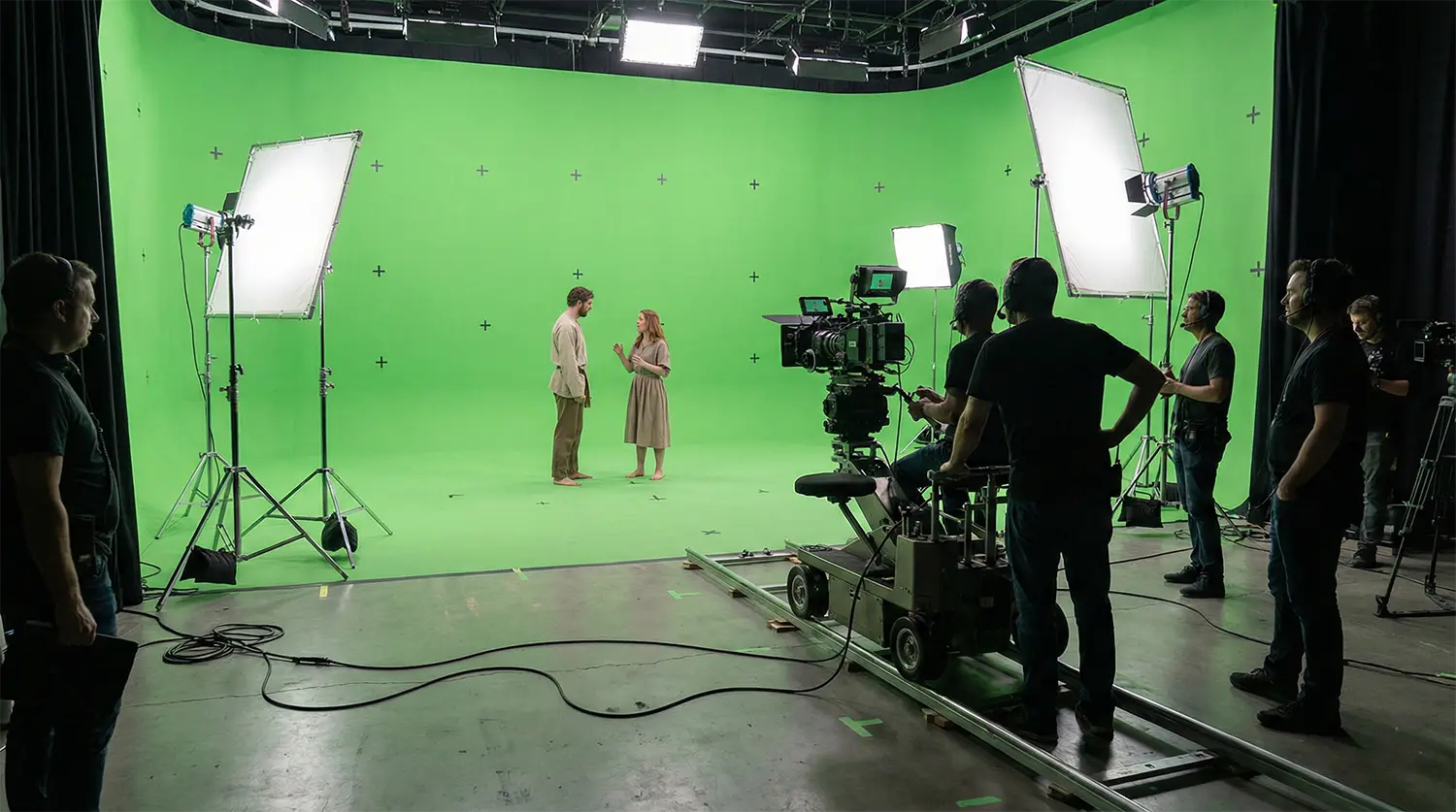
The traditional VFX workflow separates capture from creation. Shooting happens first, usually against green screen production setups or on practical locations that will be modified later. The footage becomes raw material for digital artists.
Chroma key VFX remains the foundation. Actors perform in front of green or blue screens. In post-production, software removes solid colors and composites layers into the backgrounds as required. The technique works well, but it depends entirely on what happens after the shoot wraps.
The VFX production process stretches across months of specialized work involving distinct stages:
Each department hands work to the next in sequence. The post-production pipeline involves numerous checkpoints. Directors review renders, request changes, and wait for new versions. Each revision adds time. This approach has proven effective over decades of filmmaking. Complex sequences in major films still rely heavily on traditional methods. But the timeline implications create challenges for projects with fixed deadlines.
Understanding virtual production costs requires examining where spending is concentrated. The spending pattern differs significantly from traditional approaches.
Here is how typical virtual production budgets break down:
LED Stage Rental (Production)
Daily rental rates for LED stages are significantly higher compared to traditional soundstages. This is one of the main cost drivers of virtual production.
Technical Crew (Production)
Requires specialized professionals such as LED wall operators, Unreal Engine technicians, camera-tracking specialists, and system engineers.
Unreal Engine Environment Build (Pre-production)
Digital environments and 3D assets are created before filming begins. This shifts a large portion of costs to the pre-production phase.
Equipment & Tracking Systems (Production)
Includes cameras, motion-tracking sensors, render workstations, and synchronization hardware required for real-time rendering.
Post-Production (Post)
Post-production costs are minimal compared to traditional workflows, as many visual elements are captured in-camera during filming.
Virtual production pricing front-loads expenses into development days. Upfront costs are higher than in traditional workflows. But post-production costs drop substantially. Much of what would require months of compositing already exists in the captured footage.
The production cost comparison often reveals similar totals through different paths. More money during production, less money after. For projects where post delays carry real business costs, that shift matters beyond the raw numbers.
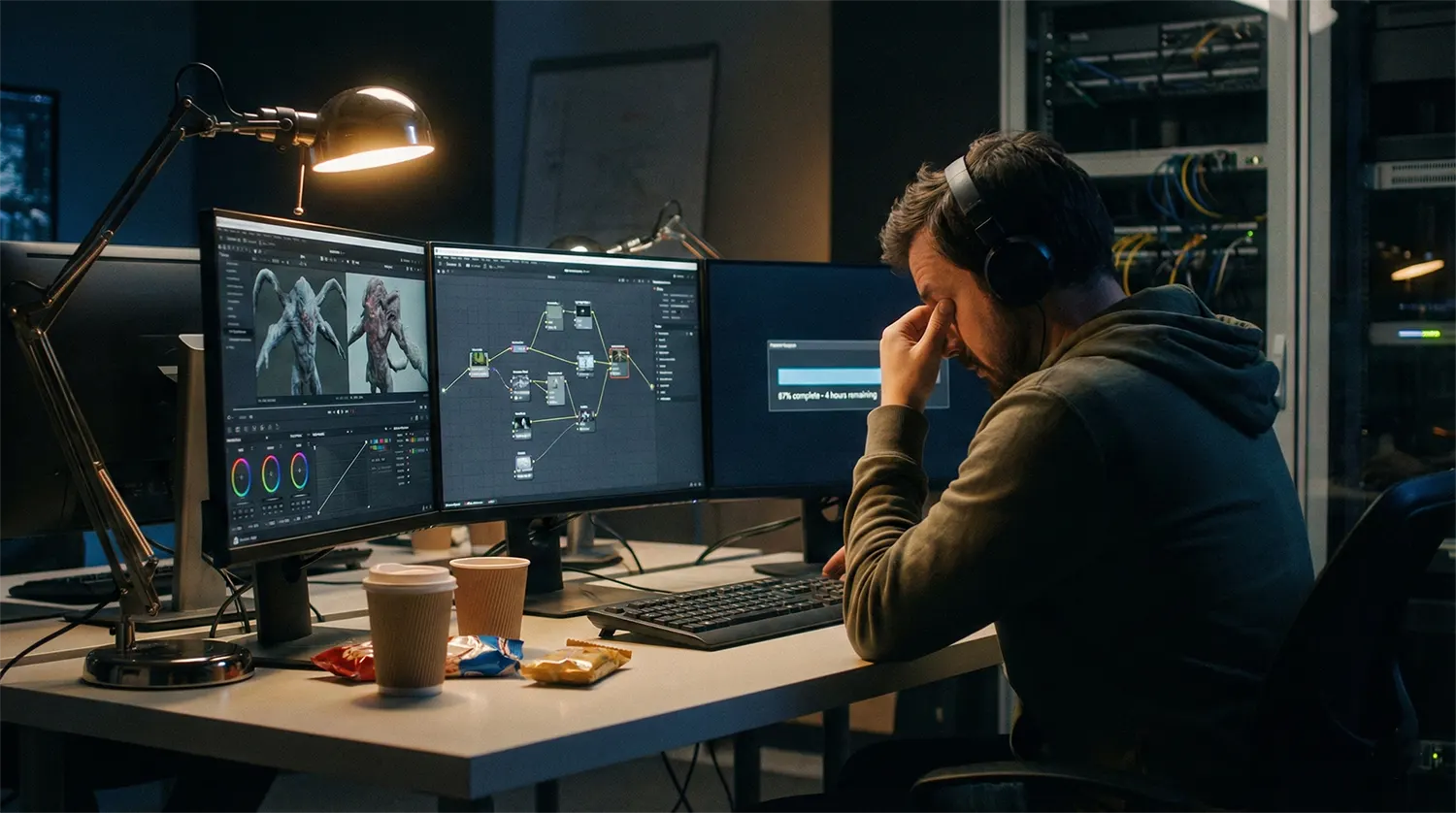
Traditional approaches spread VFX cost differently across the timeline. Production days typically carry lower daily rates. Green screen stages cost less than LED volumes. Smaller technical teams suffice during shooting.
The commercial video production cost appears manageable when viewed through the lens of upfront budgets alone. But the full picture emerges in post-development invoices.
Post-production expenses pile up across several areas:
Corporate video budget planning often underestimates these post-production expenses on VFX-heavy projects. Initial quotes typically cover assumed complexity. When stakeholders request different backgrounds or additional elements, budgets expand. Without a predictable production budget, financial planning becomes difficult. Contingency reserves grow larger to cover unknowns.
The production timeline comparison reveals significant differences in how time is allocated. Virtual creation compresses the overall schedule by moving decisions earlier.
Video production scheduling becomes more predictable because most creative iteration occurs during the prep and development phases. Post-realization focuses on refinement rather than construction.
Faster content production results from eliminating handoff delays. Traditional workflows involve waiting for renders, reviewing, requesting changes, and waiting again. Virtual realization shortens these cycles dramatically.
Final delivery happens weeks or months earlier than equivalent traditional projects. For campaigns tied to specific dates, this acceleration can determine success or failure. Speed to market video improves substantially when you remove the extended post-development timeline from the equation.
The traditional VFX production process begins primarily after shooting wraps. The initial capture phase feels fast. Footage gets captured in days or weeks. Then the real work begins.
The sequence of post-production steps creates dependencies. Modeling must finish before animation begins. Animation needs completion before lighting. Lighting comes next, followed by compositing and color grading. Each stage waits for the previous one.
Rendering adds unpredictable delays. Complex shots take hours to render single frames. Full sequences tie up render farms for days. When changes come back from review, much of the rendering is repeated.
Review cycles multiply timeline estimates. Initial delivery rarely satisfies all stakeholders. Changes flow back to artists. New versions are created. The cycle continues until final approval.
Looking at both approaches side by side clarifies the tradeoffs for business production planning:
Production Day Cost
Virtual Production usually has a higher daily production cost due to LED stages, real-time rendering, and specialized crew.
Traditional VFX setups are cheaper during the shooting phase.
Post-Production Cost
With Virtual Production, post-production costs are lower because most visuals are captured in-camera.
Traditional VFX relies heavily on post-production, making this phase more expensive.
Total Budget Predictability
Virtual Production offers high budget predictability since environments and visuals are locked early.
Traditional VFX budgets are more variable and often change during post-production.
Time to Final Delivery
Virtual Production enables a much shorter path to final delivery thanks to real-time results.
Traditional VFX requires longer timelines due to rendering, revisions, and compositing.
Creative Changes During Shoot
Virtual Production allows easy and relatively cheap creative changes directly on set.
In Traditional VFX, changes during shooting are limited.
Creative Changes in Post-Production
Virtual Production has limited flexibility after shooting.
Traditional VFX is more flexible in post-production, but changes are usually expensive.
Best Use Cases
Virtual Production is ideal for location-heavy projects and time-sensitive productions.
Traditional VFX works best for character animation and fully CGI-driven projects.
The numbers vary by project specifics, but the pattern holds consistently. Virtual production trades higher upfront investment for faster completion and fewer surprises. Traditional VFX spreads cost more over longer timelines, with greater flexibility for late-stage creative changes.
Certain project types see dramatic benefits from virtual environments. The ability to reduce production costs shows up most clearly in these scenarios:
Automotive brands now frequently use virtual workflows for business video production. Car commercials traditionally required shipping vehicles to scenic locations, waiting for ideal weather, and navigating numerous logistical challenges. Virtual stages eliminate most of those variables. The car sits on a turntable, surrounded by screens that instantly display any environment.
LED volume production puts actors in exotic locations without leaving the studio. A single stage becomes beaches, mountains, cityscapes, and alien planets across different shooting days.
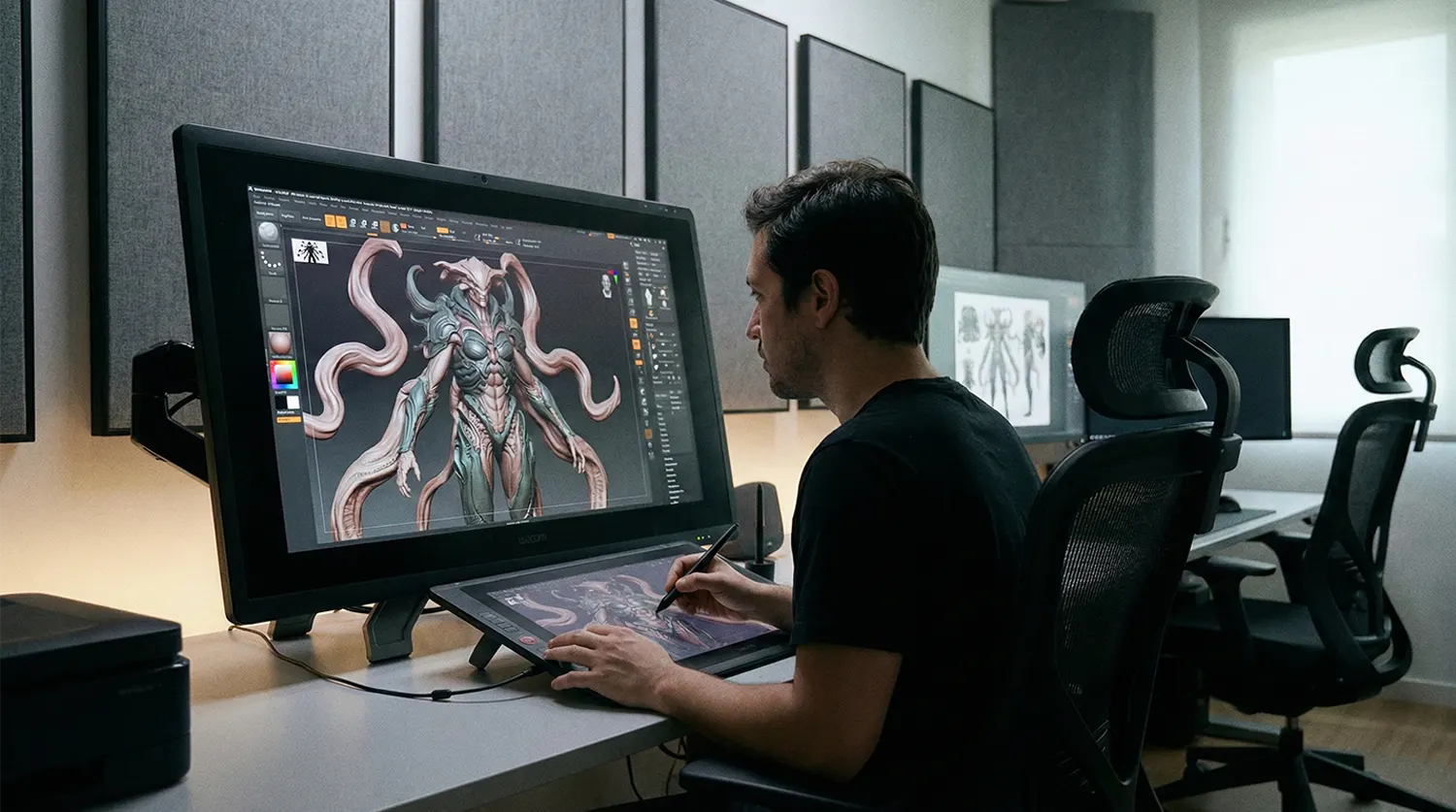
Traditional approaches still offer advantages for specific project types that should not be overlooked.
Situations favoring traditional VFX include:
Production planning for business projects with tight budgets and no deadline pressure might favor traditional approaches. When upfront costs must remain minimal and extended timelines pose no business risk, spreading expenses over lower-cost shoot days and a gradual post-development approach makes sense.
Hybrid approaches exist, too. Some projects shoot practically for certain sequences and use traditional VFX for others. The choice need not be absolute.
The decision between virtual production and traditional VFX depends on project specifics rather than universal rules.
Timeline pressure favors virtual workflow. When launch dates are fixed and delays carry real costs, a compressed schedule justifies higher production day rates. Getting finished content weeks earlier can make the budget difference irrelevant.
Budget certainty also favors a virtual production workflow. Knowing total costs before shooting starts helps financial planning. Traditional VFX budgets can grow unpredictably as post-production reveals unexpected complexity.
Creative flexibility during shooting favors virtual development. Making changes while actors are still on set costs far less than rebuilding shots months later.
But projects needing extensive character work, complex animation, or purely synthetic imagery still benefit from traditional expertise. And projects without time pressure can spread costs across longer traditional schedules.
The question is not which approach is better universally. The question is which approach best aligns with your specific deadlines, budget constraints, and creative requirements. Answer that honestly, and the choice becomes clearer.