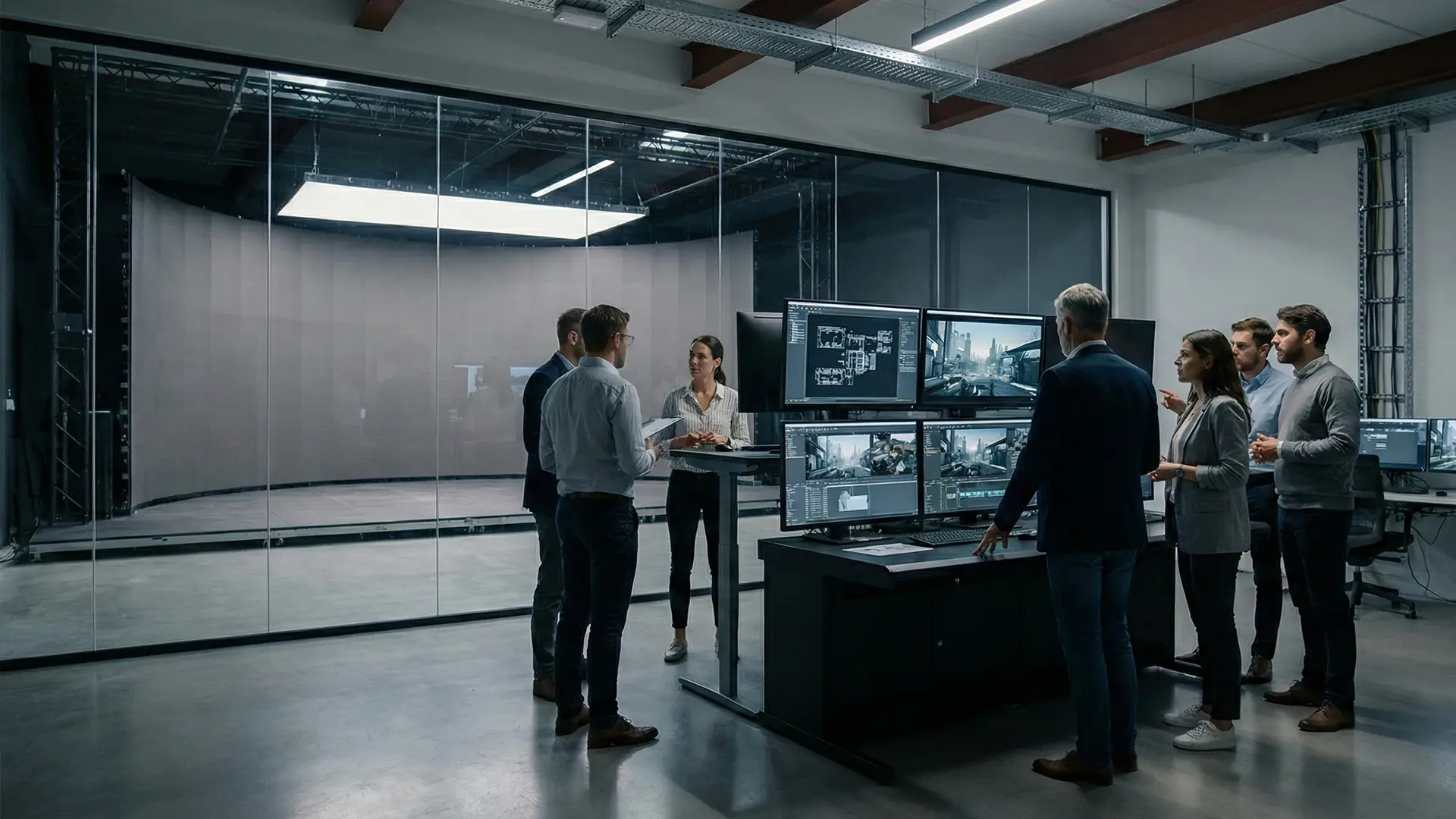
The Mandalorian changed the conversation. Since those LED walls appeared behind Baby Yoda, every brand, agency, and production company started asking the same question: should we shoot on an LED volume or stick with the green screen? Toronto has become a serious player in this space, with multiple facilities offering both options at wildly different price points.
Here's the problem – nobody talks straight about virtual production cost. Studios quote day rates without explaining what's actually included. Clients get surprised by post-production bills that dwarf the original rental fee. Green screen looks cheaper until the compositing invoices arrive. LED volumes seem expensive until you skip the location shoot entirely.
This guide breaks down real numbers, hidden costs, and the scenarios where each technology actually saves money. No marketing fluff, just practical budget information for productions shooting in Toronto.
The Mandalorian changed everything. When audiences saw what LED volumes could achieve, the technology jumped from experimental curiosity to mainstream demand. Hollywood adopted it first, but brands followed quickly. Now virtual production Toronto facilities handle automotive launches, corporate keynotes, product reveals, and advertising campaigns that would have required international travel just five years ago.
The shift makes business sense. Brands need content faster than traditional production allows. Advertising agencies want controlled environments that eliminate weather delays and permit cancellations. Corporate clients demand professional visuals without sending crews across continents. Commercial video production timelines compressed from months to weeks, and virtual production delivers this speed without sacrificing quality.
Toronto emerged as a North American hub for this technology. The city's film infrastructure, skilled crews, and competitive costs attract productions that might otherwise shoot in Los Angeles or London. Local studios invested heavily in LED walls, motion capture systems, and real-time rendering capabilities. The result: businesses shopping for virtual production find genuine options here.
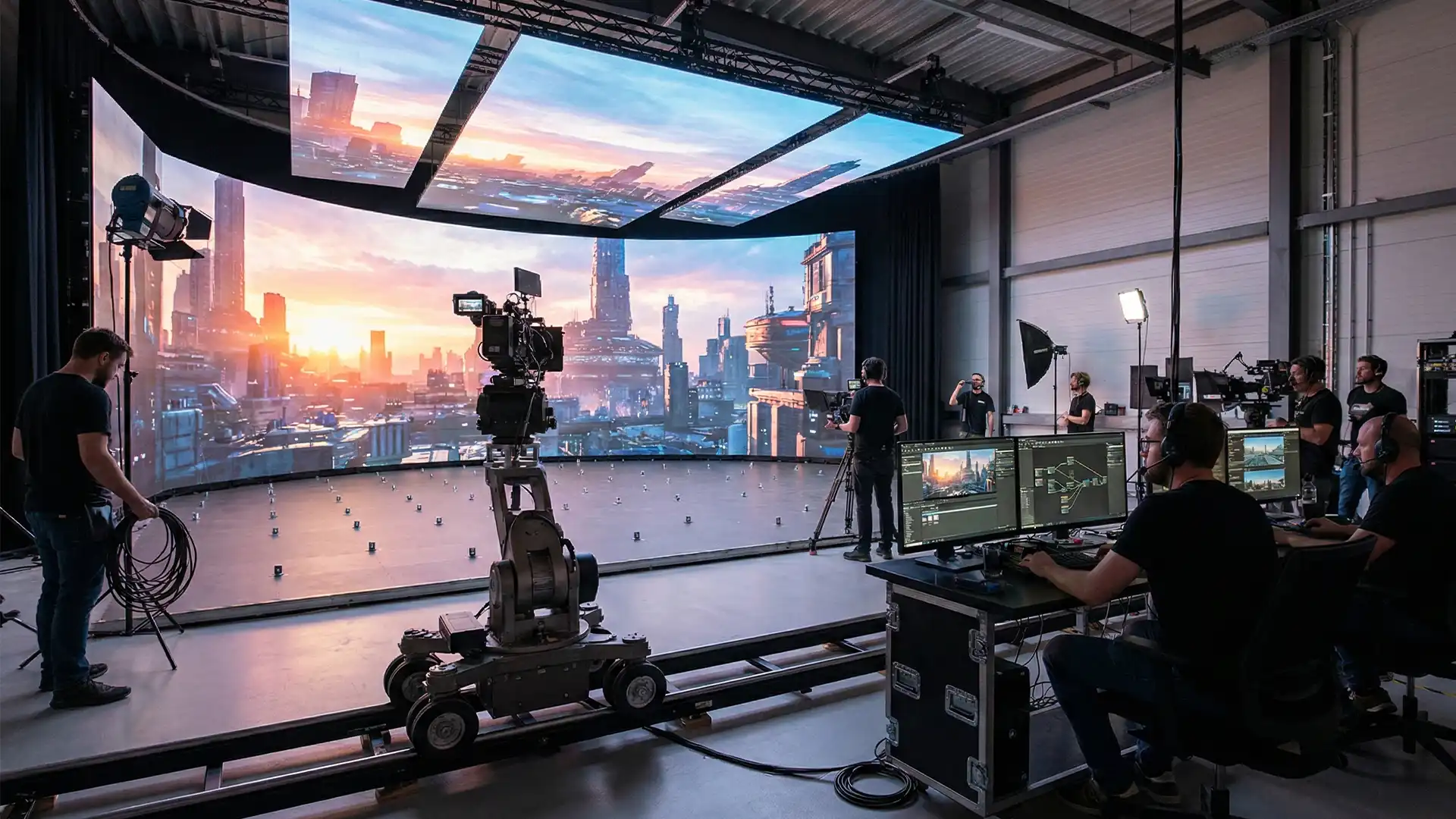
Virtual production places actors and products inside digital environments that appear on LED screens during filming. The camera captures both the physical subject and the digital background simultaneously. What you see on set is essentially what appears in the final footage.
This differs fundamentally from traditional post-production graphics. With green screen, actors perform against colored backdrops that get replaced later through compositing. They react to environments they cannot see. Directors approve shots without knowing how backgrounds will look. The final result emerges weeks or months after production wraps.
Virtual production cost reflects the technology's advantages:
The technology consolidates what traditionally happened across multiple phases into a single production day. This compression drives both the appeal and the pricing structure.
Several variables determine what you'll actually pay. Understanding these factors helps with production budget planning before requesting quotes.
The smart business is to get detailed quotes from several houses in Toronto before you commit. Ask what’s included in the day rate – some studios include tech crew and basic environments, others have a separate charge for each component. A $15,000 quote that includes everything is better than a $10,000 quote that balloons to $25,000 when you add tracking operators, Unreal artists, and environment licensing.
LED wall rental packages typically bundle several elements together. Studios structure pricing this way because the technology functions as an integrated system rather than separate components. You can't just rent the wall and figure out the rest – the LED panels need calibration, the tracking system needs integration with Unreal Engine, and someone needs to operate all of it simultaneously. Toronto facilities learned early that unbundling creates chaos on set.
Standard LED stage rentals typically include access to the LED wall itself, with usage measured in hours or full production days depending on the agreement. This covers the physical screen time required for filming and real-time playback during shoots.
Most rental packages also include a tracking system that provides camera position data synchronized with Unreal Engine. This setup ensures correct parallax, perspective, and environmental alignment during real-time rendering.
Technical crew support is commonly part of the rental. These operators manage the LED volume during production, overseeing playback, calibration, and real-time adjustments to maintain visual accuracy on set.
Basic environments are usually included as well, consisting of simple background scenes that can be used without additional customization. These base environments allow productions to get started quickly without immediate asset development.
Finally, power and climate control are covered within the rental cost. This includes the facility resources required to run the LED panels, servers, and cooling systems necessary for stable operation throughout the shoot.
Additional costs typically apply for:
A virtual production studio Toronto facility typically quotes project rates rather than simple hourly rentals. This approach reflects the reality that setup, testing, and optimization require time that pure rental models don't capture. Expect quotes to include pre-production consultations where technical teams assess your specific needs.
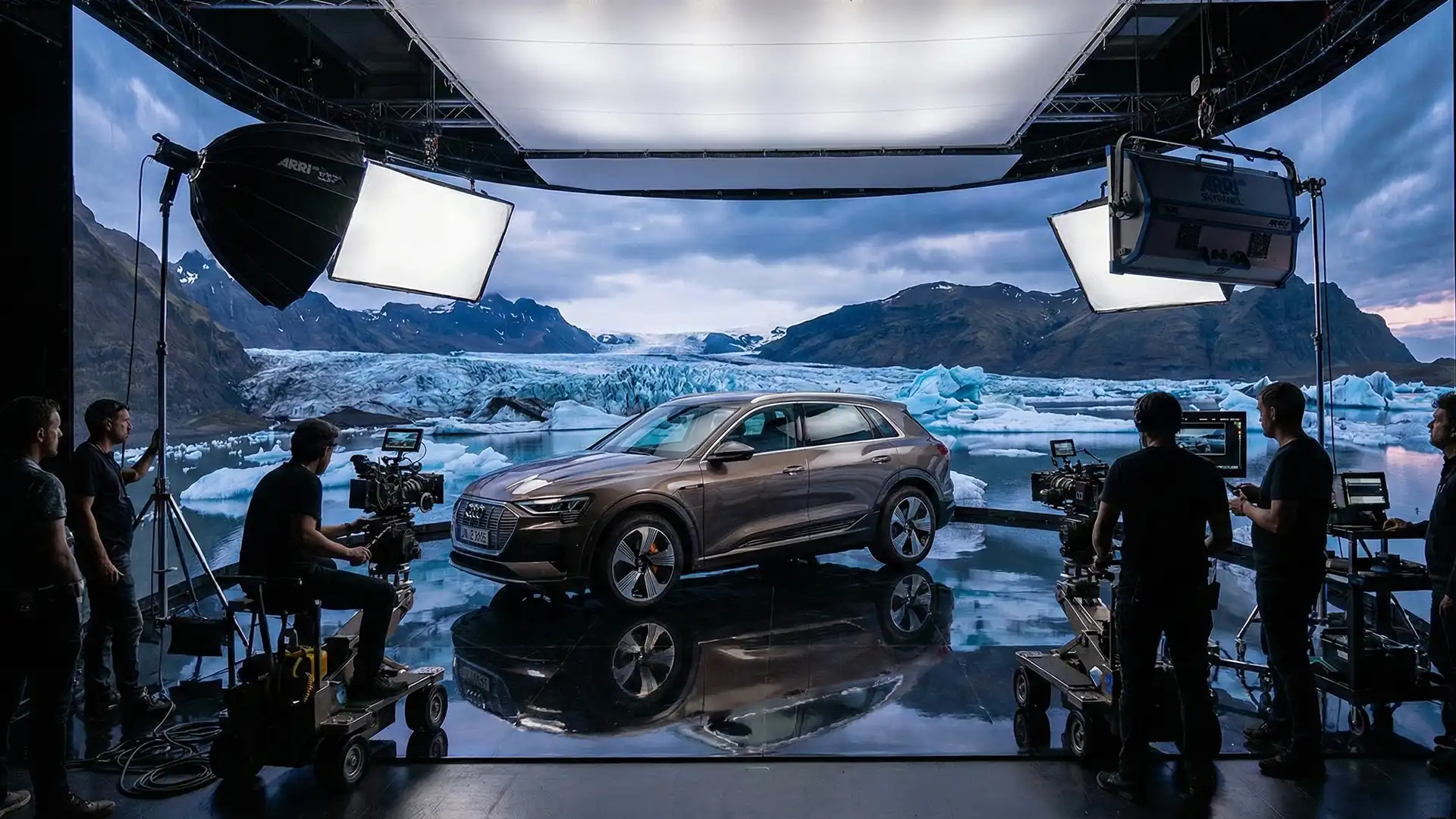
When does LED volume make sense? Automotive campaigns use it extensively because car reflections capture the LED environment naturally. Keynote presentations benefit from immersive backdrops that react to speaker movement.
Brand campaigns requiring exotic locations save substantially on travel. High-end commercials justify the technology through production value that differentiates brands. Any project where real-time flexibility matters – changing time of day, swapping locations between takes, adjusting lighting on the fly – benefits from Unreal Engine virtual production capabilities that green screen simply cannot match.
Screen cost structures differ significantly from LED volumes. The technology is older, more widely available, and operates through different economic logic. Studios offering green screen rentals compete on price because the barrier to entry is low – paint a wall green, hang some lights, and you're technically in business. This commoditization drives rental rates down but shifts the financial burden elsewhere.
The real green screen cost reveals itself after production wraps. What you saved on studio rental, you spend on post-production. Compositing artists charge by the hour or by the shot. Complex scenes with hair, transparent objects, or motion blur multiply those hours fast. A one-day green screen shoot can generate weeks of post work, and those invoices add up quietly until the final budget looks nothing like the original estimate.
Production costs include:
Post-production costs include:
The trap with green screen cost appears in the split between production and post-production. Studio rental looks affordable compared to LED volumes. But compositing bills accumulate during weeks of post work. Complex scenes requiring realistic integration can cost more in VFX than the original LED rental would have required.
For enterprise video production with simple needs, green screen remains economical. Talking head videos against basic backgrounds don't require expensive compositing. Corporate training content works fine with straightforward keying. The technology fails when projects demand realistic environment integration that reveals green screen limitations.
Direct comparison reveals where each technology delivers value. The right choice depends on project specifics rather than blanket rules about which costs less.
When comparing LED volume production to traditional green screen workflows, the most immediate difference appears in rental costs. LED volume stages typically command higher daily rates, often ranging from approximately $15,000 to $50,000 or more, while green screen studios are generally available at lower daily costs, commonly between $2,000 and $8,000.
Post-production requirements further separate these approaches. LED volume shoots require minimal post-production, as environments, lighting, and reflections are captured in camera. Green screen productions, by contrast, rely heavily on post-production work, which adds both time and complexity.
These differences directly affect delivery timelines. Projects shot on LED volumes are often completed within days or a few weeks, whereas green screen productions frequently extend into weeks or even months due to rendering, compositing, and revision cycles.
Client approval workflows also differ significantly. LED volume environments can be reviewed and approved in real time on set, enabling immediate feedback and decision-making. With green screen, clients typically must wait until post-production is complete to review the final visuals.
Environmental realism tends to be higher in LED volume productions, as natural reflections and interactive lighting are captured during filming. Green screen realism varies widely and is largely dependent on the available visual effects budget and execution quality.
Finally, flexibility for changes favors LED volume workflows. Adjustments to environments or lighting can be made instantly during the shoot, while similar changes in green screen productions often require costly and time-consuming revisions during post-production.
LED rental costs more upfront but compresses post-production. Virtual production pricing reflects this consolidation – you're paying to capture near-final footage rather than raw material requiring extensive processing.
Speed-to-market favors LED volumes. Campaigns launch faster when post-production shrinks from months to days. For time-sensitive product launches trust that post-production will deliver promised results. For clients who need visibility and control, cost efficiency media production through LED becomes compelling despite higher rental fees.
Not every project benefits equally from LED technology. But when the stars align, the math tilts heavily in favor of virtual production. Certain project types generate substantial savings through virtual production despite higher facility costs. A proper production cost estimate should capture these downstream savings:
To reduce production costs on suitable projects, LED volumes deliver counterintuitive economics where higher rental fees produce lower total budgets.
LED volumes are impressive, but they're not the answer to everything. Sometimes the smartest financial decision is knowing when not to use the expensive option. Not every project benefits from LED technology. Budget control video production sometimes means choosing simpler tools:
Content production ROI calculations must account for actual project needs. Overspending on technology that doesn’t improve outcomes wastes money as surely as underspending on projects requiring premium solutions.
Neither LED volume nor green screen is inherently expensive or cheap. Both technologies serve purposes at price points reflecting their capabilities. The question isn't which costs less – it's which delivers results efficiently for your specific project. Effective production budget planning starts with honest assessment of what your content actually requires, where the footage will appear, and your tolerance for post-production revision cycles.
The practical advice: consult before committing. Studios providing honest guidance will assess your project and recommend appropriate technology, rather than pushing LED studio rental regardless of fit. Request breakdowns showing how costs flow through production and post-production phases. Compare total project costs rather than rental rates alone. Toronto offers genuine choice in virtual production capabilities – making that choice wisely starts with understanding what you're actually buying at each price point.