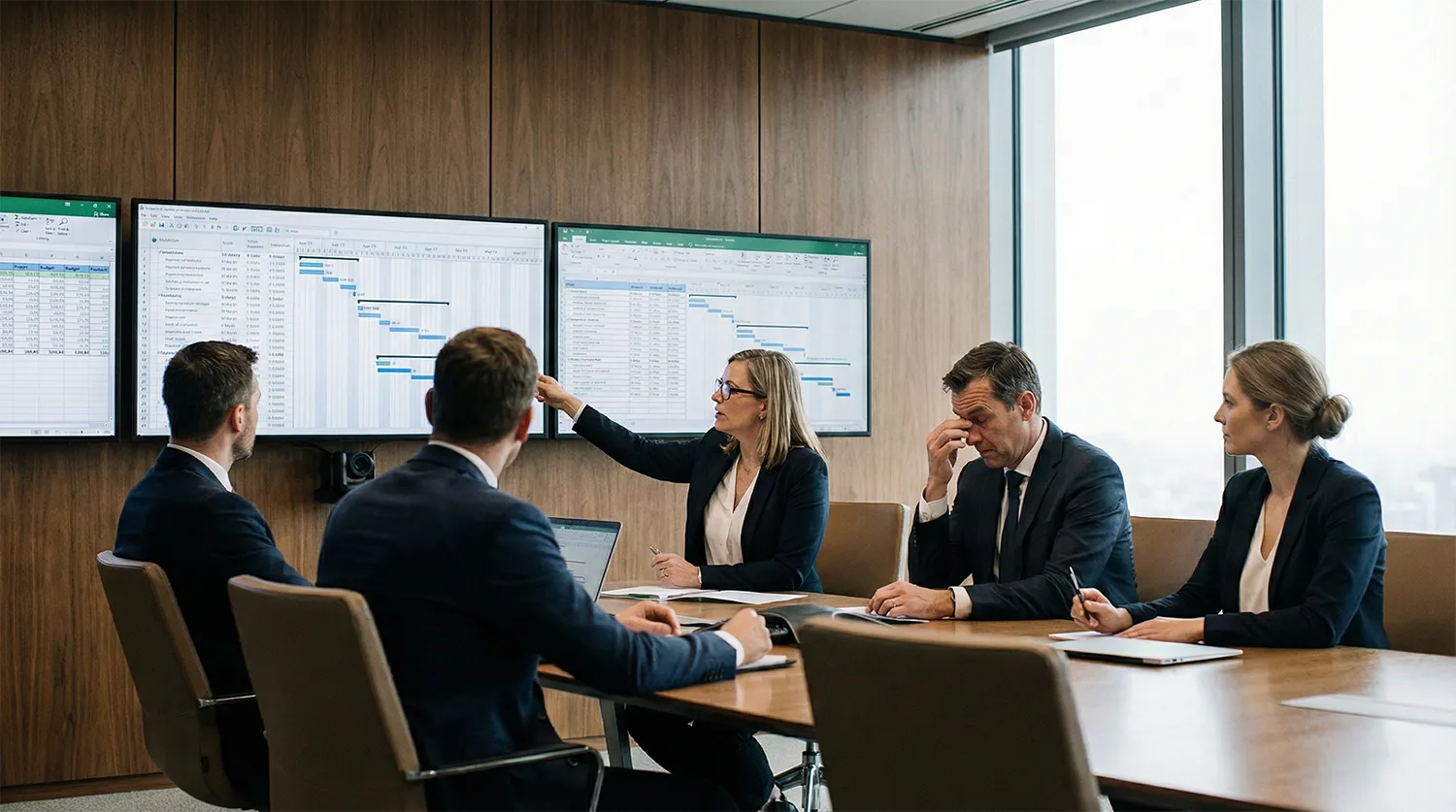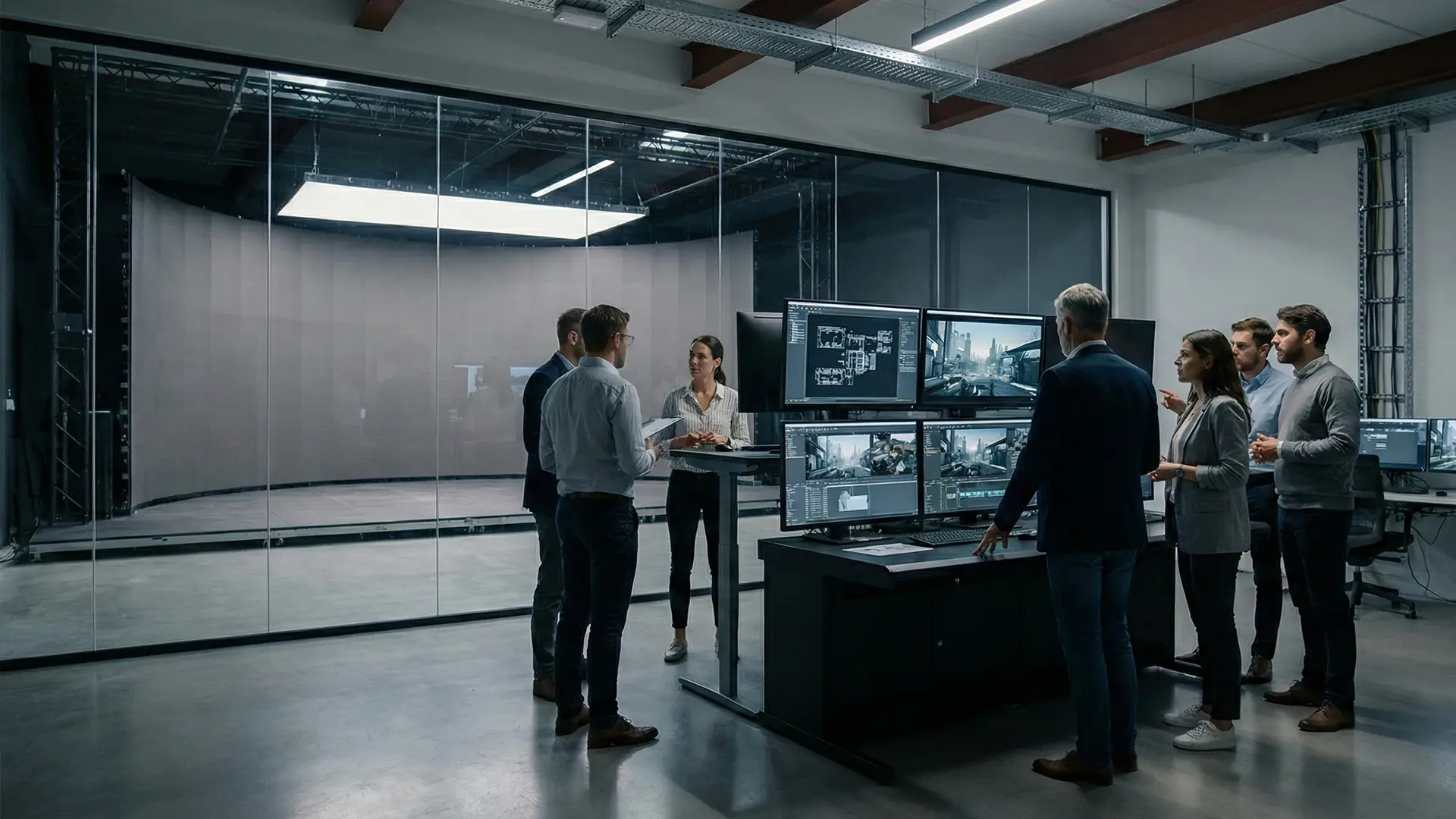
Five years ago, virtual production belonged to blockbuster films with massive budgets. Today, it's a procurement decision for marketing directors, brand managers, and corporate communications teams. The technology moved from cinema stages to commercial applications faster than most industries anticipated. Picking the right studio can make or break a campaign, and most buyers have never done this before. The following sections break down what actually matters when evaluating virtual production partners.
The headline is not an exaggeration. What used to require a call to a Hollywood facility now involves RFPs, vendor comparisons, and budget approvals from finance departments. A virtual production studio now serves automotive launches, keynote presentations, product reveals, and advertising campaigns. Brands discovered that LED volumes deliver content faster and often cheaper than traditional location shoots. The question shifted from "should we try this?" to "which facility should we hire?"
This change happened quickly. In 2020, most marketing teams had never set foot on an LED stage. By 2024, agencies were adding virtual production line items to standard media plans. The procurement aspect matters because it changes who makes the decision and what criteria they use. Creative directors care about visual quality and flexibility. Procurement managers want clear pricing, reliable delivery timelines, and vendor stability. Choosing wrong costs money, time, and sometimes careers. This guide helps you choose virtual production studio partners based on factors that actually determine project success.
Before contacting any facility, define what you're actually making. Vague briefs produce vague estimates. Specific requirements generate accurate quotes and realistic timelines. Environment requirements shape technology needs. A simple branded backdrop differs from a photorealistic Icelandic landscape. Fantasy environments require different assets than urban streetscapes. A virtual production company requires this information to scope work accurately.
Start with content type:
Production timeline affects pricing and feasibility. Single-day shoots cost less than multi-day productions. Rush timelines limit options and increase costs. Stage availability and booking varies by facility – popular studios book weeks or months ahead.
Consider content reuse potential. Will these environments appear in future campaigns? Can assets serve multiple projects? Reusability changes asset ownership discussions and impacts total value calculations.
The more specific your goals, the more accurate estimates become. Studios appreciate detailed briefs because they enable honest assessments of fit and feasibility.
The two primary technologies serve virtual production needs. Each works and costs differently. Understanding the distinction prevents expensive mismatches between technology and project requirements.
LED volumes display digital environments on massive screens surrounding the set. Cameras capture both physical subjects and digital backgrounds simultaneously. The LED panels cast real light on actors and products. Reflective surfaces – cars, glasses, jewelry – pick up the virtual environment naturally. What appears on the monitor during shooting closely matches the final footage.
Green screen studio rental provides coloured backdrops replaced during post-production. Actors perform against flat green or blue surfaces. Compositors later extract subjects and place them into digital environments. The process requires extensive visual effects work after production wraps.
Virtual production compared to green screen comes down to project complexity and total budget. Simple talking-head videos work fine with green screen. Complex scenes with reflective products or realistic environment integration favor LED volumes despite higher rental fees.
Not all LED facilities offer equivalent capabilities. Technical specifications determine what’s achievable within your virtual production stage rental. Toronto has studios ranging from small walls suited for talking heads to massive curved volumes that can handle car commercials with full 360-degree coverage. The price difference between these facilities is significant, but so is the gap in what you can actually accomplish on set. Cheaper isn’t better if the volume can’t deliver what your creative vision demands.
Here’s what to evaluate when comparing facilities:
Equipment means nothing without maintenance and expertise. Ask how often systems receive updates and calibration. Inquire about backup equipment if primary systems fail. The best virtual production studio for business projects maintains infrastructure professionally.
Technical support during your shoot matters just as much as the hardware itself. When something goes wrong – and on complex productions, something always does – you need people who can solve problems fast without burning through your rental hours.
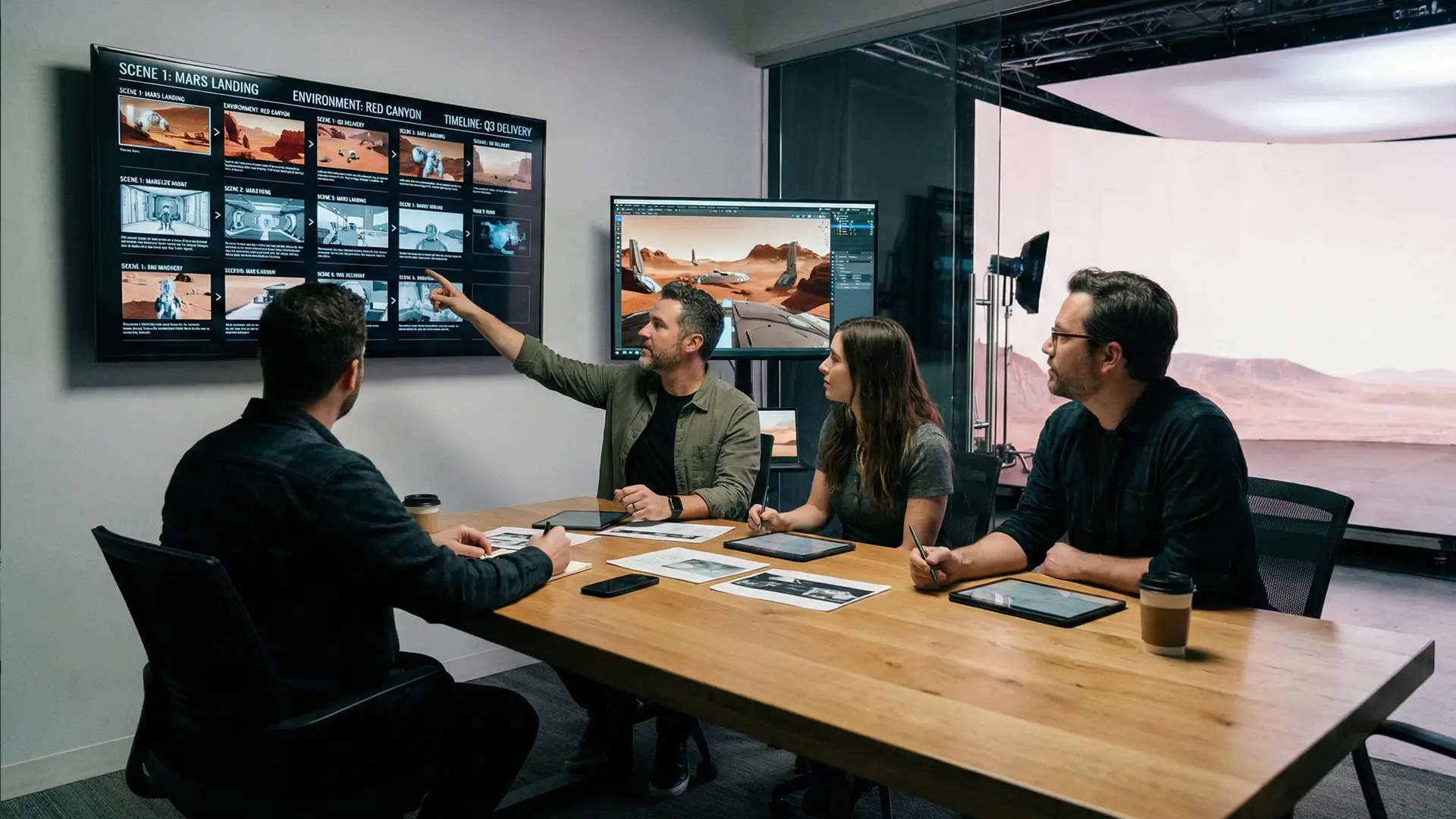
LED volume studio rental without qualified operators wastes money. The technology requires specialized expertise that traditional film crews don’t possess.
Essential personnel for virtual production:
The studio should manage technical operations as a service. Ask whether the crew comes included or costs extra. Request credentials and recent project examples from similar projects. Virtual production for commercials requires crews who understand brand work, not just narrative production. They need to know how agencies operate, how approval cycles work, and how to deliver options that satisfy multiple stakeholders in the room. A crew that's only shot indie films won't understand why the client needs seventeen variations of the same shot.
Corporate video virtual production benefits from teams familiar with executive presentations and stakeholder communication needs. The pace differs from commercial work — executives have limited availability, messaging must be precise, and there's rarely time for creative experimentation on set. Studios experienced in this space know how to prep environments in advance, minimize on-set decisions, and deliver polished results within tight scheduling windows.
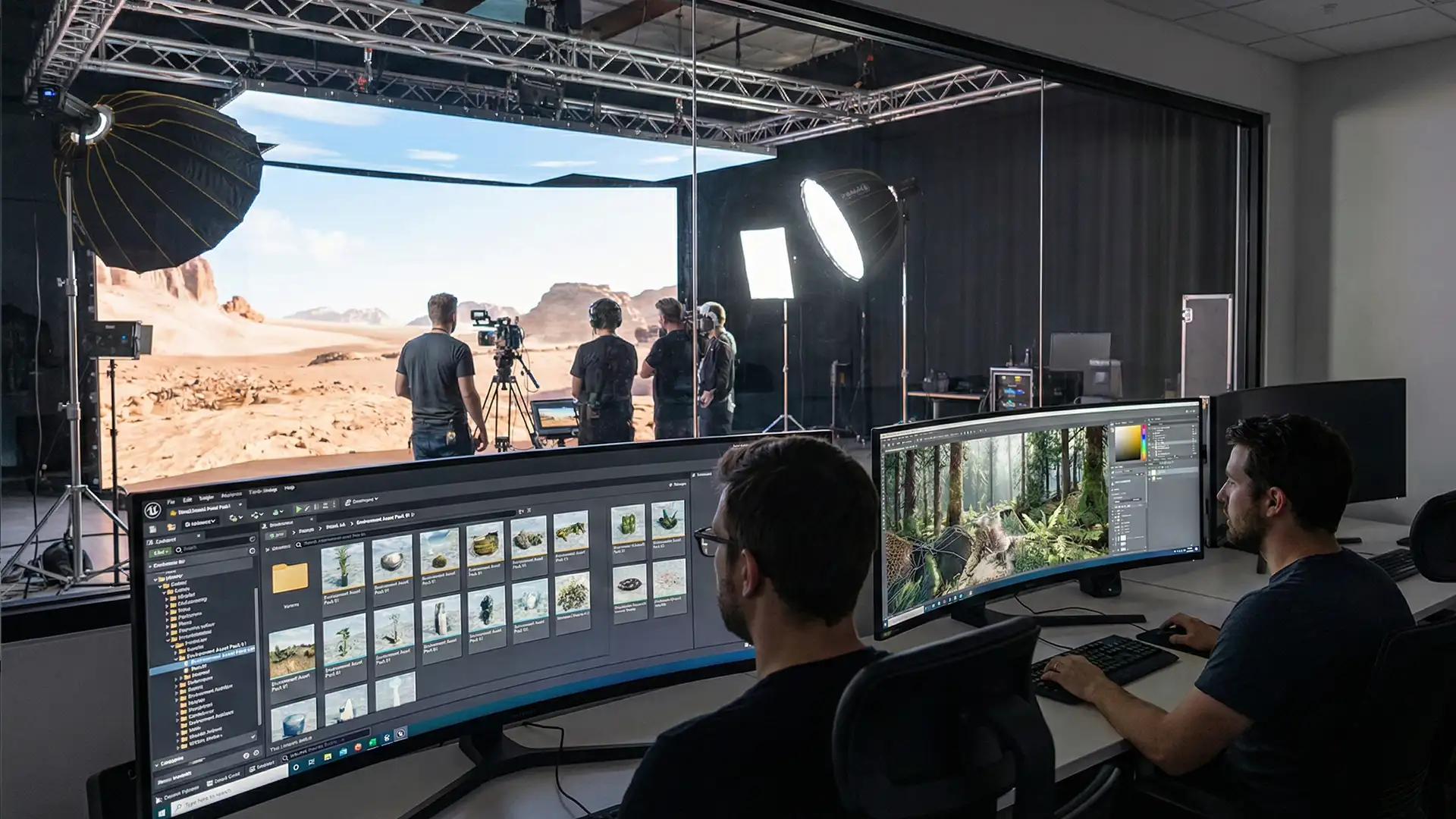
Digital environments drive virtual production’s creative possibilities. How studios handle asset creation affects project timelines, budgets, and reusability.
Some facilities maintain libraries of pre-built environments. Standard locations – offices, warehouses, nature scenes, urban backgrounds – exist ready for use. Library assets reduce development time and cost. Ask what’s available before assuming custom work is necessary.
Custom virtual set design services create unique environments matching specific creative visions. Development timelines vary from days for simple modifications to weeks for complex original builds. Get realistic estimates before committing to production dates.
Ownership questions matter for ongoing campaigns. Who controls assets after project completion? Can you use environments in future productions without additional fees? Some studios retain ownership and charge licensing for reuse. Others transfer assets to clients. Clarify the terms before signing contracts.
Production budget planning should account for asset development separately from stage rental. Complex environments requiring extensive 3D modeling cost more than library assets with minor customization. Accurate budgets require honest asset complexity assessments.
Virtual production studios provide more than technical infrastructure. The best partners contribute creative problem-solving that improves outcomes.
Strong studios ask questions before providing quotes. They want to understand creative goals, not just fill booking slots. If initial conversations focus only on dates and rates, expect transactional relationships rather than genuine partnership.
Pre-visualization and tech scouting separate professional operations from basic rentals. Pre-vis shows how shots will look before production days burn budget. Tech scouts identify challenges early when solutions cost less. Studios offering these services invest in client success.
Ask how studios handle creative input. Do they wait for complete direction or contribute ideas? When clients face challenges, do technical teams propose solutions? Collaborative studios produce better results than passive equipment providers.
Virtual production for marketing video benefits from teams who understand commercial objectives. They suggest camera angles that highlight products effectively. They recommend environments that reinforce brand positioning. Furthermore, they flag technical limitations before creative teams fall in love with impossible shots.
Virtual production should reduce project risks, not create new ones. The technology promises controlled environments and predictable outcomes. Studios that deliver on this promise differ from those that introduce chaos.
Clear approval processes prevent expensive surprises. How do environment revisions work? When do creative decisions require sign-off? What happens if technical problems consume production time? Professional virtual production studio checklist evaluations include these operational questions.
Pipeline ownership matters. When facilities control complete technical workflows, concerns get solved internally. When clients coordinate between separate vendors for LED operation, Unreal Engine work, and camera tracking, finger-pointing replaces problem-solving. Ask whether studios own their complete pipeline or assemble components from multiple providers.
LED wall studio selection should favor facilities with proven workflows over impressive equipment lacking operational maturity. A well-run studio with good equipment outperforms a poorly run studio with great equipment every time.
Certain warning signs indicate studios unlikely to deliver professional results. Walk away when you encounter:
Trust your intuition during initial conversations. The way a studio approaches the budgeting process reflects how they will handle your project. If communication seems disorganized, answers sound rehearsed but thoughtless, or you're pushed into decisions you're not prepared for, this is a sign of what awaits you on the day of filming.
Good studios want to work with informed clients because informed clients have realistic expectations. Bad studios want to work with confused clients because confusion masks incompetence until it's too late to change anything.
A virtual production company determines project outcomes more than equipment specifications. The virtual production stage becomes a workplace where creative visions materialize or collapse. Choosing partners carefully prevents expensive discoveries during production when changes cost the most.
Think beyond facility rental. Seek studios that function as strategic partners invested in your success. The goal isn’t accessing LED walls – it’s achieving predictable results, maintaining brand control, and accelerating campaign timelines.
The right studio makes virtual production feel manageable rather than risky. They guide clients through unfamiliar technology while respecting creative intent. They solve problems before difficulties derail schedules. Likewise, they deliver footage that matches expectations established during pre-production.