Walk into any conversation about virtual production and numbers start flying. Pixel pitch, resolution, panel counts, and refresh rates. The terminology can feel overwhelming when you just want to know whether the final footage will look good. But these specifications matter in ways that directly affect your budget and results. Understanding the basics helps you ask better questions and avoid expensive mistakes.
The appeal of filming with LED walls is obvious: beautiful backgrounds, no location travel, and weather that cooperates every time. Marketing teams see the demo reels and immediately want that look for their campaigns. But the “wow effect” in a showroom does not automatically translate to quality on your screen.
Pixel pitch and directly determines how your product, talent, and brand appear on camera. Get these wrong and close-up shots reveal distracting patterns. Get them right and viewers never think about the technology at all.
The business risk runs in two directions. Specifications like LED wall resolution that fall too modestly leave you with footage that looks cheap or requires expensive fixes in post. Going overboard with premium options means paying for quality differences that no one will notice in the final deliverable.
Neither outcome aligns with your budget; the goal is to match technical capabilities to actual requirements. That requires understanding what these numbers mean and how they interact with camera work.
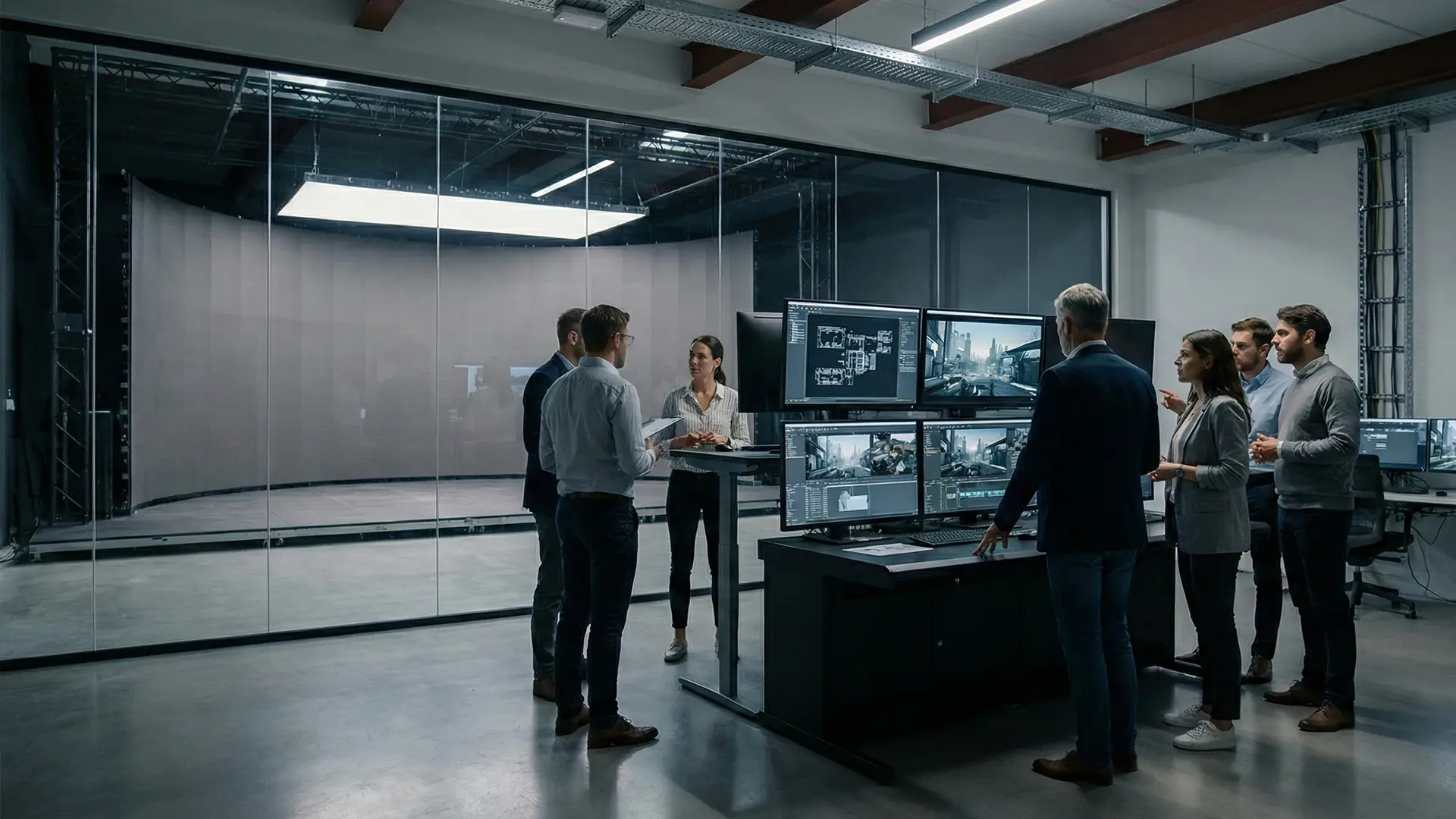
Before diving into specifications, the basic setup deserves explanation. An LED volume surrounds performers with LED panels displaying computer-generated environments. The typical configuration includes a curved back wall, sometimes extending to the side walls, with an LED ceiling. Some productions use LED floor panels to create reflections.
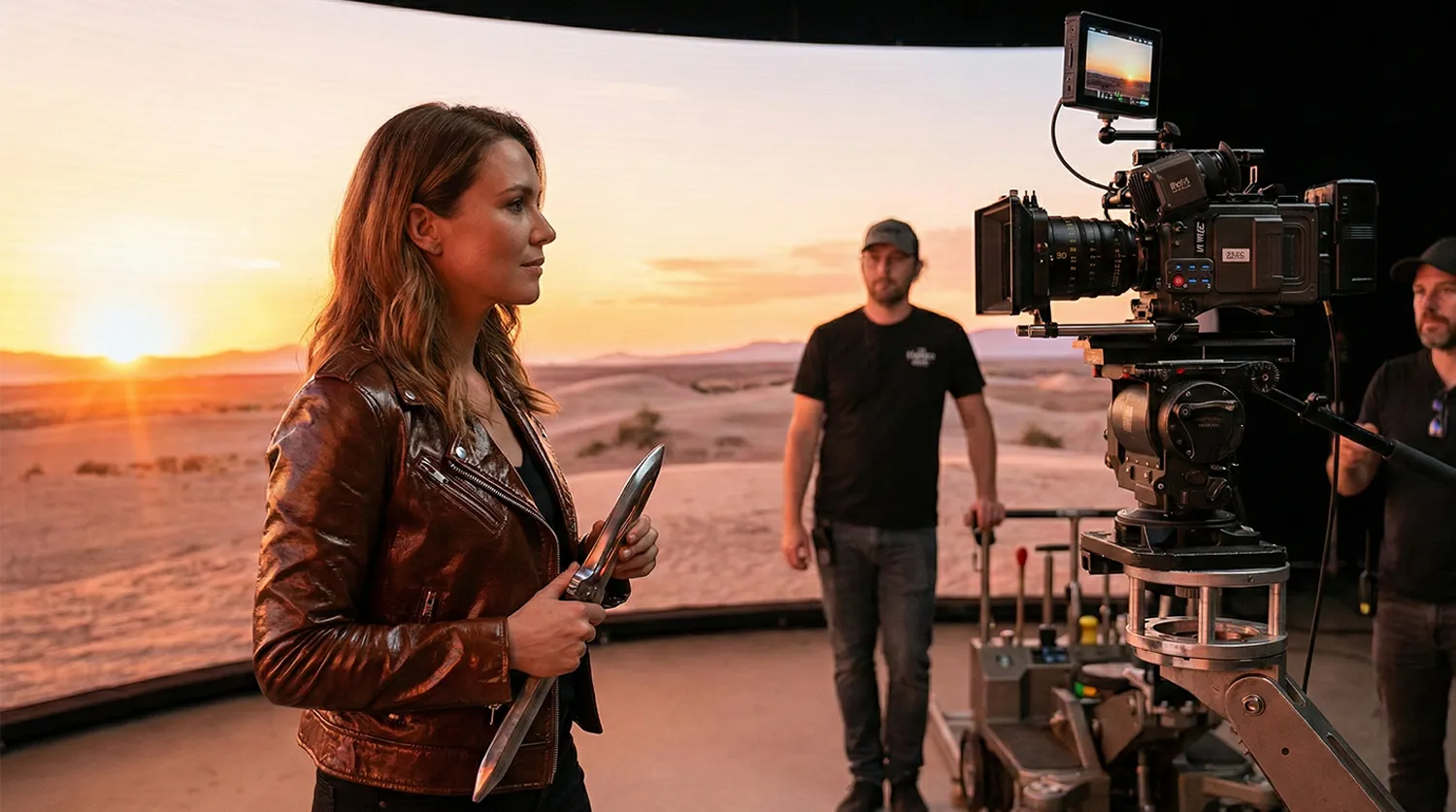
This LED screen for virtual production does something fundamentally different from a green screen: the camera captures the background directly during filming. Lighting from the screens falls naturally on actors and objects, and reflections appear on shiny surfaces automatically.
In-camera VFX LED technology means what you see on the monitor during shooting closely resembles the final product. This changes how decisions happen on set. Directors can adjust creative elements in real time, and clients can approve looks on the spot rather than waiting months for post-production renders.
The LED stage serves as both an environment and a light source. Understanding this dual function helps explain why technical specifications matter so much.
These two terms are often confused, but they measure different things. LED volume resolution refers to the total pixel count across the entire display surface. A wall might run 8000 pixels wide by 3000 pixels tall. That total number determines how much detail the overall image can contain.
LED wall pixel pitch measures something else entirely. Pitch is the physical spacing between individual LED diodes, measured in millimeters. A 2.6mm pitch means the diode centers are 2.6mm apart. A 1.5mm pitch packs diodes closer together.
The relationship between these specifications creates important tradeoffs:
Pixel Pitch 1.5 mm or less — very high diode density, excellent close-up capability, premium cost.
Pixel Pitch 1.9–2.3 mm — high diode density, good for medium shots, moderate cost.
Pixel Pitch 2.6–2.9 mm — medium diode density, mainly for wide shots, lower cost.
Pixel Pitch 3.0 mm and more — lower diode density, suitable mostly for background plates, budget cost.
A smaller pitch means more diodes per square meter, which translates to greater detail and higher cost. The math is straightforward. The challenge lies in determining the level of detail your project actually requires.
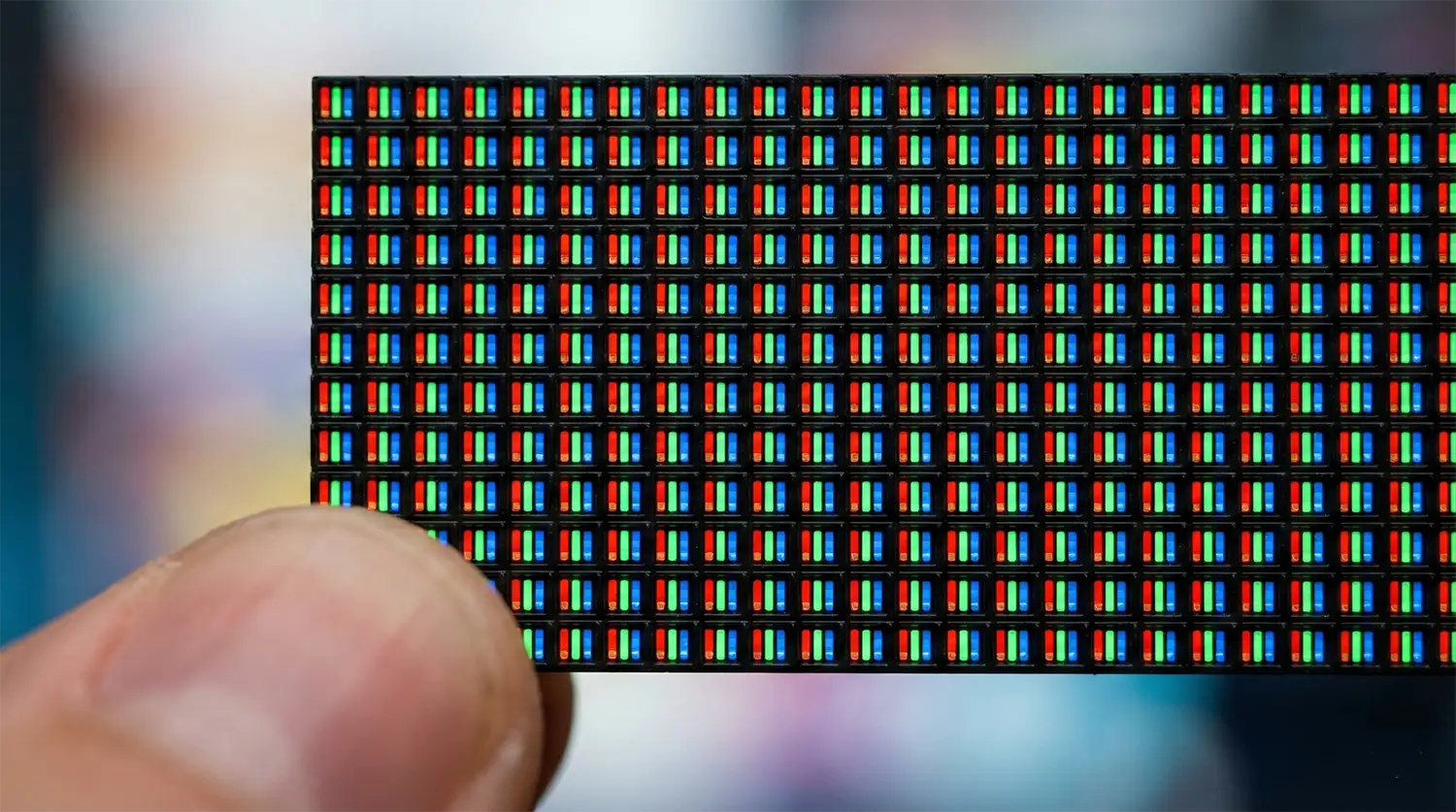
When cameras get close to LED walls, individual diodes become visible. The image breaks down into a grid pattern, ruining the illusion. Pixel grid visibility destroys the sense that backgrounds are real environments.
This problem scales predictably with pitch size. A larger pitch makes the grid visible from farther away, while a smaller pitch allows cameras to operate closer before the pattern appears.
The effect shows up differently across various subjects:
Image sharpness on LED depends heavily on this pitch selection. A pitch that works beautifully for wide establishing shots may fail completely for product close-ups in the same production.
The relationship between camera distance LED wall, and pixel pitch determines whether footage looks seamless or obviously synthetic. This is where planning becomes critical.
Minimum camera distance LED requirements follow predictable rules. The camera cannot get closer than a certain threshold without revealing the pixel structure. That threshold varies with pitch, lens choice, and sensor resolution.
General guidelines for camera positioning:
The camera sensor vs LED pitch relationship adds another variable. Higher-resolution sensors capture more detail, which can work against you by making pixel structure more visible. A 4K camera might see grid patterns that a 1080p camera would miss entirely.
Lens choice LED wall decisions also matter significantly. Longer lenses compress perspective and can make backgrounds appear closer. Wider lenses might show more of the wall surface. Each choice affects how pitch visibility plays out in actual footage.
Different production types have settled into common specifications based on practical experience. These ranges represent industry norms for the LED wall for video production work:
Feature films — typical pitch 1.5–1.9 mm, as close-up capability is essential.
Television series — typical pitch 1.9–2.3 mm, offering a balance between image quality and budget.
Commercial campaigns — typical pitch 1.5–2.6 mm, depending on specific shot requirements.
Corporate video — typical pitch 2.3–2.9 mm, since compositions are often wider.
Music videos — typical pitch 1.9–2.6 mm, as stylized visuals can tolerate slightly lower pixel density.
Automotive productions — typical pitch 1.5–1.9 mm, because reflections and car surfaces demand high precision.
LED volume for film work tends toward a finer pitch because theater cameras spend most of their time on a coarser pitch in peripheral areas that rarely receive direct camera attention. This zoned approach balances technical filming requirements against budget constraints.
Here is where the math gets interesting. Total XR stage wall resolution depends on both pitch and physical size, so a larger wall with the same pitch contains more total pixels and the cost scales accordingly.
Consider a wall measuring 20 meters wide by 6 meters tall. At a 2.6mm pitch, the surface contains approximately 7,700 by 2,300 pixels. At 1.5mm pitch, the same wall jumps to approximately 13,300 by 4,000 pixels. Nearly four times as many LEDs are required to cover the same area.
This scaling explains why LED volume studio rentals vary so dramatically in pricing. The physical size tells only part of the story. A pitch specification substantially increases hardware investment.
Sometimes projects request specifications beyond actual requirements. A digital backdrop for corporate interviews does not require the same level of capability as a feature film car chase. Matching resolution to deliverable format and viewing context keeps budgets sensible.
LED volume configuration optimization involves selecting specifications that meet the project requirements without paying for unused capacity. A wall built for theatrical close-ups costs far more than one built for web video wide shots. Both might look similar to casual observers, but the underlying technology differs significantly.
The virtual production LED wall functions as both background and lighting source. This dual role creates both opportunities and challenges.
Brightness specifications determine whether the LED output can compete with supplemental lighting or gets washed out. Stages designed for an LED wall for filming need sufficient brightness to illuminate talent while displaying backgrounds. Insufficient brightness limits creative options.
Color accuracy affects how skin tones render under LED lighting. LED wall calibration ensures colors display correctly across the entire surface. Panels from different manufacturing batches might vary slightly without proper calibration. Different subjects respond uniquely to LED lighting:
Refresh rate interacts with camera shutter angles. Rates that appear fine to the human eye can cause banding or flickering on camera. LED wall testing before production confirms compatibility with planned camera settings.
Selecting appropriate LED wall setup specifications requires answering several practical questions first.
Key factors for LED volume explained in practical terms:
On-set visualization provides creative benefits regardless of pitch specification. But production quality control for final deliverables depends heavily on matching specifications to shot requirements.
Consistent LED panel spacing across the entire volume is also important. Gaps or misalignments between panels create visible seams that distract from the virtual environment. Well-maintained facilities check alignment regularly.
Experience reveals patterns in how productions misjudge their requirements. Frequent errors include:
The testing error deserves emphasis. Bringing your actual camera package for LED wall testing before committing to a solution helps identify issues that specification sheets cannot predict. Every camera and lens combination behaves slightly differently. What works for one production may fail with different equipment.
The technical side of LED volume production follows predictable mathematics. Pixel pitch for LEDs determines the minimum camera distance; wall size × pitch equals total resolution; and brightness and refresh rate must match camera requirements.
These numbers translate directly into visual results. Understanding the relationships helps you communicate requirements clearly and assess whether proposed solutions align with your actual needs.
Quality comes from correct specifications, not maximum specifications. The goal is to match technology to project requirements precisely. That match delivers professional results without unnecessary expense.