The way blockbuster movies get made has transformed. What was once cutting-edge experimentation has become industry standard. Franchise filmmaking virtual production work together now. The biggest studios worldwide have embraced this change. The question is no longer whether to adopt virtual production - it’s how to master it.
For decades, big productions sent large teams around the world. They filmed in exciting locations. Directors dealt with unpredictable weather, expensive permits, location fees, and complex logistics. But this traditional approach created constant risk, including:
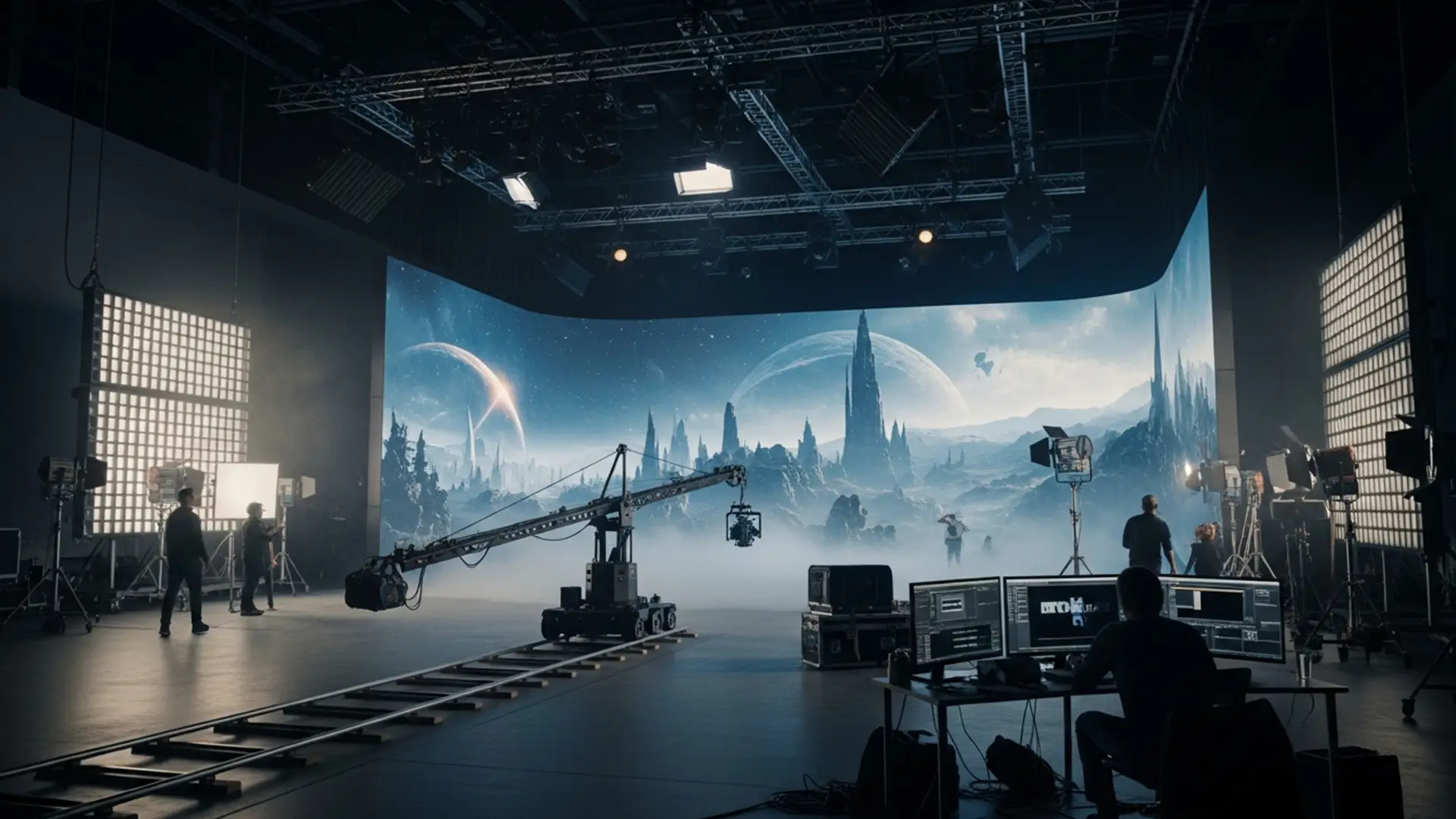
Virtual production flipped the game. LED walls and real-time rendering give studios new power. They can adjust scale, budgets, and creative choices. Lightning changes, locations switch in minutes, and weather doesn’t matter anymore. For franchise filmmaking, this ensures visual consistency, faster production, and reduced location costs. What began as experimental tech is now a strategic necessity.
Large cinematic universes demand something traditional filmmaking struggles to deliver: absolute consistency. When Marvel releases films over the years, fans expect Asgard to look the same in both Thor and The Avengers. Star Wars travels to many worlds in its series, but the visuals stay clear and consistent. This real-time filmmaking challenge would be almost impossible with conventional location shooting.
Virtual production uses on-set virtual environments:
Later, when a sequel needs that setting, designers reuse the asset. This way, they avoid starting over and guessing details. This consistency serves both artistic vision and financial efficiency.
The technology also enables accelerated pre-production. Directors, cinematographers, and production designers visualize entire sequences before the cameras roll. They experiment with camera angles, lighting setups, and composition in real time. This fast pre-production leads to fewer surprises on set. It also speeds up decision-making, which can take weeks with traditional methods.
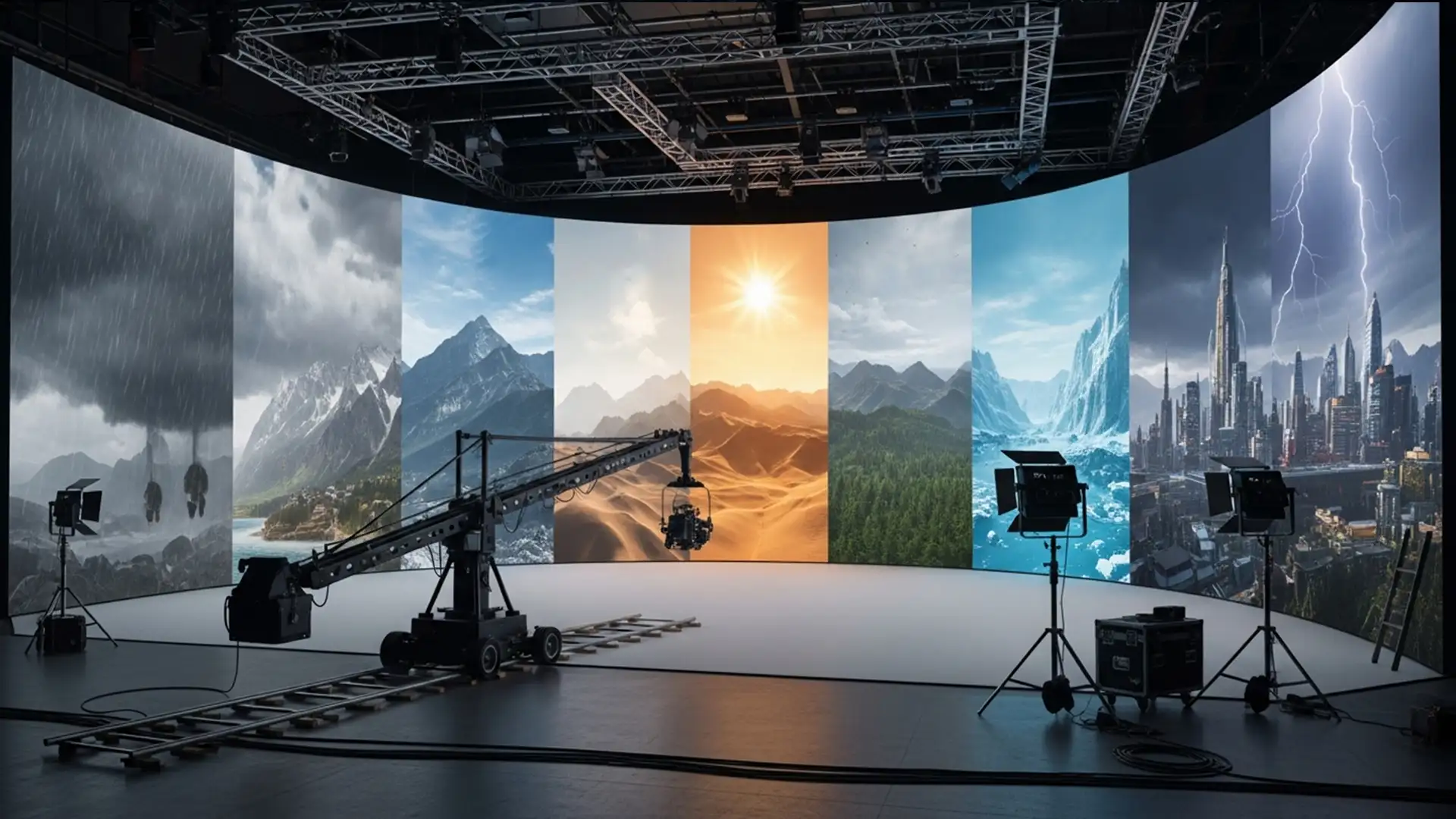
The tech stacks for virtual production vary depending on the needs of each franchise. Yet some systems lead in Hollywood today. For example, Industrial Light & Magic's StageCraft is the technology behind Star Wars and many Disney projects. StageCraft uses a special rendering system, featuring LED volume stages. It is The Volume," where actors perform surrounded by large, high-definition screens. They show computer-generated backgrounds, and the system allows virtual set customization, including:
This combination of technology and flexibility lets filmmakers create immersive worlds. It also allows them to maintain complete control over the set.
Avatar: The Way of Water used custom virtual cameras and motion capture tech in a new way. Director James Cameron used Autodesk's MotionBuilder to create environments. This real-time filmmaking challenge would be almost impossible without conventional location shooting.
Dune: Part Two used real sets and large LED screens. This mix created environments that combined physical elements with digital enhancements. This method kept the hands-on, immersive feel Denis Villeneuve aimed for.
Jon Favreau teamed up with Industrial Light & Magic for The Mandalorian. They aimed to bring virtual production to TV. The result was revolutionary. Cinematographer Greig Fraser and his team created StageCraft. This is an LED volume that surrounds actors and real sets with huge video walls. They show photorealistic digital environments in real time.
The LED volume benefits became immediately obvious. Actors no longer acted against blank green screens and imagined backdrops. They noticed the real environments around them. They reacted to the lightning from the LED walls. This helped them give more authentic performances. The practical benefits grew. Visual continuity in franchises has improved a lot. Every Star Wars project could use the same digital assets. Mandalorian episodes established certain environments; Obi-Wan Kenobi reused them. Book of Boba Fett drew from the same library. The savings in reconstruction costs and the visual continuity across seasons proved transformative.
Marvel’s approach is a bit different. They don’t rely on LED volumes like Star Wars. Instead, they combine virtual production with real set building and digital effects. Movies use virtual production and traditional VFX, like:
This hybrid approach enabled faster production cycles that traditional filmmaking couldn’t match. Marvel eliminated the need for expensive location shooting by creating digital environments in-camera. Post-production time dropped. Scenes that used to take weeks of VFX work now come out of the camera with final-quality results. Faster production cycles allowed the MCU to keep its tight release schedule. This way, it didn’t have to compromise on visual quality.
How Marvel accelerates production through virtual methods:
Marvel’s pipeline efficiency gives it a competitive edge. It keeps audiences engaged with a steady flow of content.
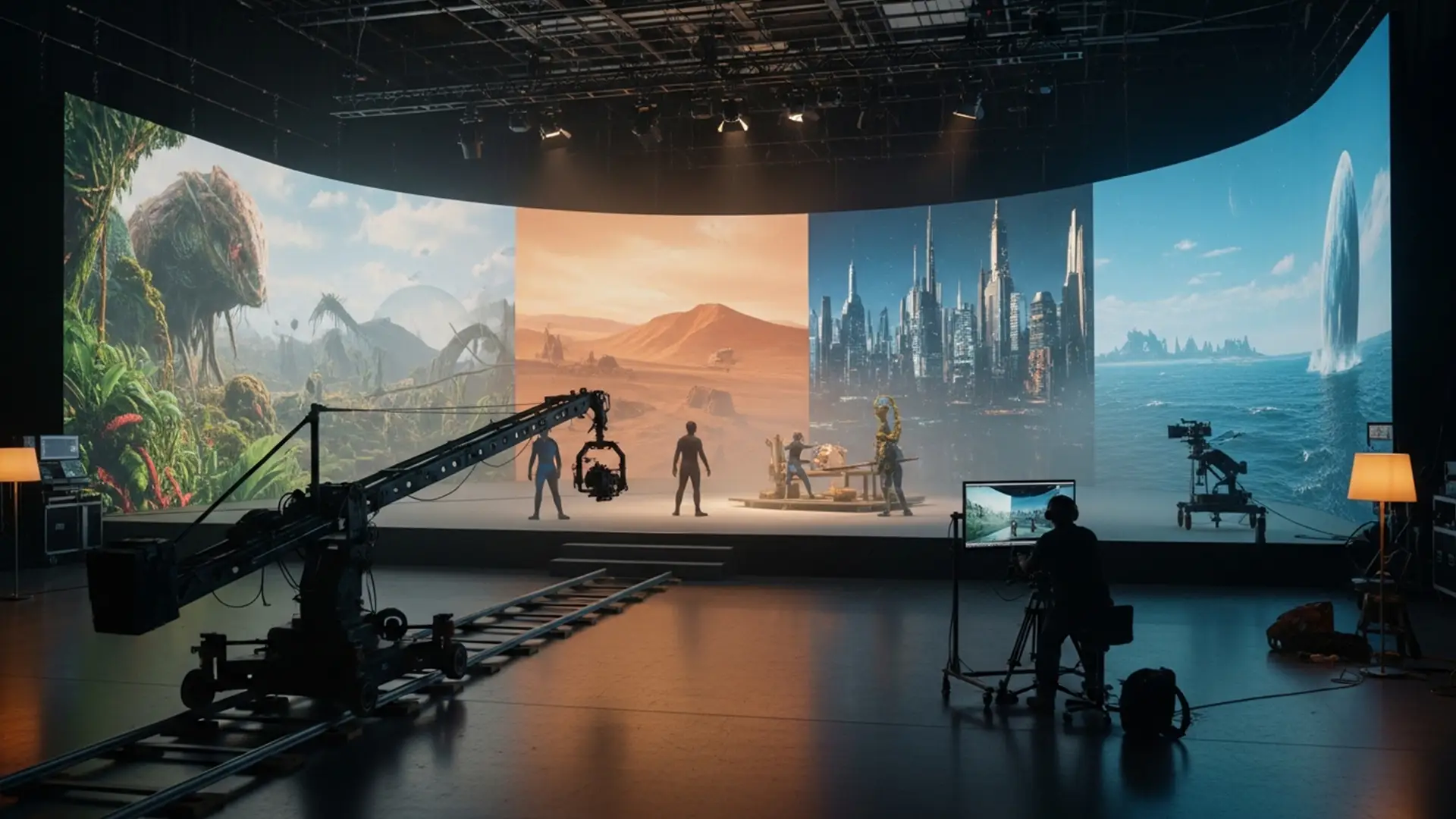
James Cameron's Avatar sequels represent scalable worldbuilding at its most ambitious. Cameron created a unique virtual production pipeline. He used motion capture technology and real-time virtual cameras. This was different from traditional LED volumes. He directed scenes in digital Pandora locations. He saw how the actors’ virtual selves interacted with the digital world on the screen.
This system allowed enhanced worldbuilding at unprecedented scale. Cameron could change whole scenes while filming. He adjusted lightning, perspectives, and camera placement with a click. He could, as he described it, “turn the whole scene into a living miniature” and explore it at different scales. Traditional shooting would've been impossible. Virtual worldbuilding made it workable.
The Fast & Furious franchise employs a unique approach to virtual production. They focus on previsualization and reusable virtual assets for action sequences. The franchise doesn’t build full LED volumes for general use. Instead, it uses virtual production for dangerous driving scenes and stunts. Reusable virtual assets get deployed across many films, reducing asset creation costs.
Real-time scene adjustments let action directors experiment before filming. They can try different camera angles, timing, and practical effects integration. When filming actually begins, the team knows exactly what they’re capturing. This cuts down uncertainty. Also, it lets you make changes on the spot if inspiration strikes while shooting.
Denis Villeneuve’s Dune utilized a planned approach to virtual production. They filmed it in Bucharest, Hungary, using real sets and locations. It also added virtual enhancements to complement the visuals. The team built consistent environments that supported digital expansion. Sandstorm sequences, spacecraft interiors, and palace architecture combined practical construction with virtual extensions.
The Matrix Resurrections, meanwhile, pioneered virtual cinematography terminology decades ago. This legacy lives on. Today’s productions still rely on John Gaeta’s ideas from the first Matrix film. They focus on real-time digital worldbuilding.
Jurassic World franchises combine practical effects with large-scale digital environments. While the dinosaurs themselves are created digitally, they are placed within richly developed settings. The films combline real-world locations with virtual elements. This creates steady environments. Here, dinosaurs interact with both real and digital settings.
The advantages of virtual production add to serious competitive primacy for major studios. First, franchises maintain visual consistency between films and seasons through asset reuse. When environments live in digital libraries, they remain accessible forever.
Virtual production speeds up workflows. Faster pre-production means fewer surprises. When filmmakers create effects in-camera, they speed up post-production. This means less time spent on compositing later.
The advantages of virtual production extend to cost reduction in film production. Reduced location costs represent 50% savings compared to traditional location shooting. Crews don’t need to travel globally, book accommodations, or secure expensive permits. The FX series Snowfall saved as much as $49,000 per episode in season five.
They saved money by:
Controlled production budgets became possible. Studios no longer face weather delays that extend schedules. Directors and cinematographers gained creative flexibility for directors on set. They can adjust environments, lighting, and compositions without expensive rebuilds or reshoots.
Finally, virtual production improved the integration of VFX, lighting, stunts, and practical effects. Everything works in one real space instead of being composited together later. Actors react to practical lighting from LED walls. Stun coordinators work in actual environments rather than against green screens.
The trajectory points forward. Virtual production benefits will drive studios to use procedural environments. Producers can create or change these digital spots during production. They aren’t fixed assets made months in advance.
AI assistants will help directors and production designers explore options faster. An AI trained on thousands of films can suggest the best lighting setups for the story. This replaces the need for a cinematographer to adjust the lights by hand. Rather than production designers sketching concepts, AI could generate variations.
Now, weeks of shooting can lead to reasonable costs for each episode. Virtual production is now the norm. Studios like DNEG and ILM are setting up permanent LED volumes. Training programs are getting filmmakers ready for this key technology.
Virtual production is no longer an experiment. It is now the foundation of major film sets. Technology defines the style and rhythm of modern Hollywood franchises. Directors can manipulate environments with speed. Cinematographers can see the final lightning before shooting. Actors perform in immersive digital worlds. Filmmaking transforms itself.
Studios that master virtual production will define the future of franchise filmmaking. Consistency, speed, and cost efficiency - key goals of big-budget production. Virtual production now delivers all three at once. Major franchises with many films, seasons, and spin-offs gain a strong edge. The future of blockbuster movies belongs to those who excel on the digital stage.